

What Is Collaborative Care?

A proven model that connects primary care providers, behavioral health managers, and psychiatric consultants to deliver whole-person mental health care.

Understanding the Model
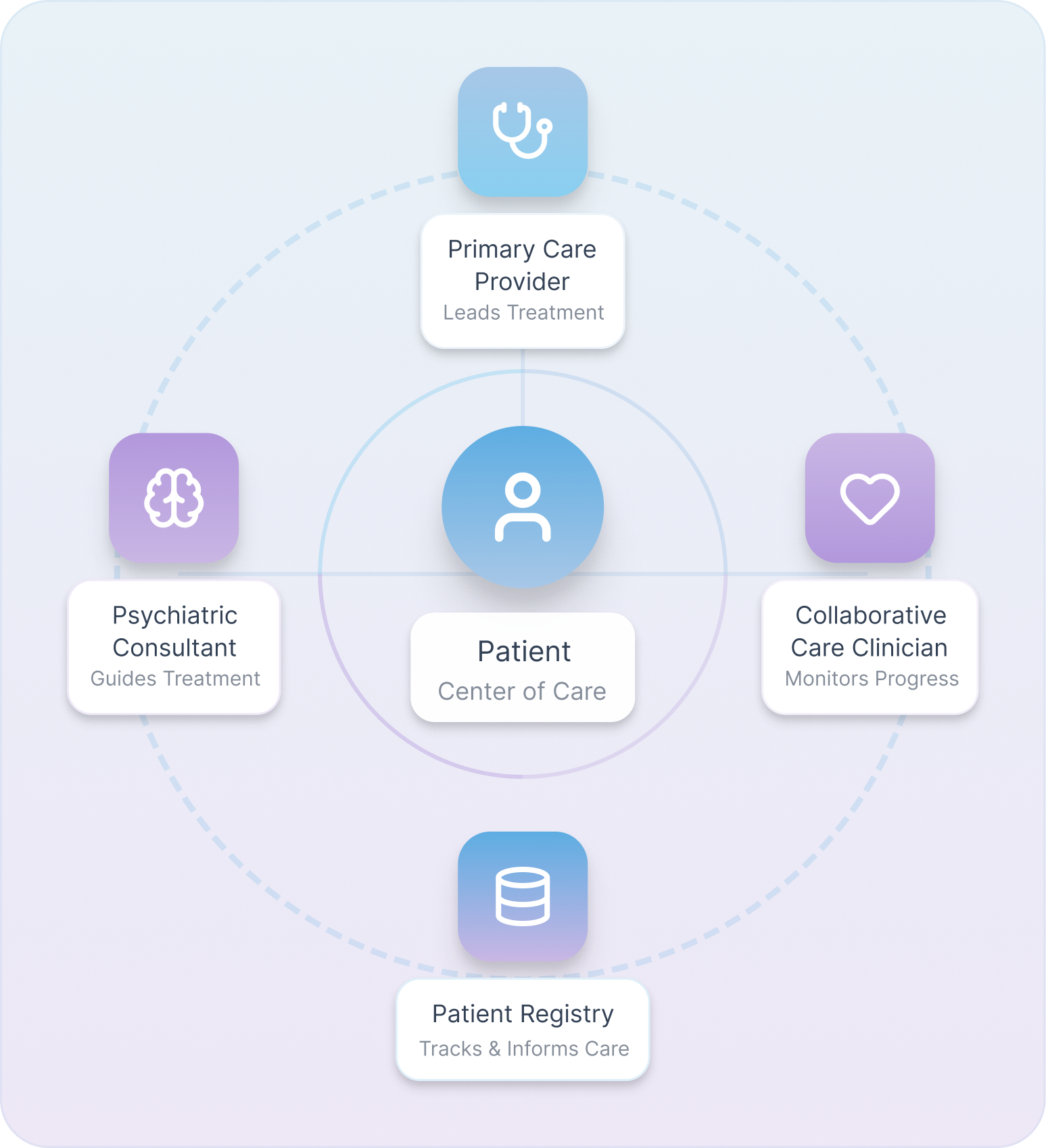
Collaborative Care is an evidence-based model that integrates behavioral health care into primary care settings.
It connects Primary Care Providers, Behavioral Health Care Managers, and Psychiatric Consultants in a team-based approach to improve outcomes for patients with mental health needs.
This structured approach ensures that mental health support is not an afterthought, but a core component of comprehensive primary care, delivered where patients already seek treatment.

How It Works
Our four-step process ensures comprehensive, coordinated mental health support.

Coordinate Care
Our behavioral health care manager follows up with personalized support.

Consult Specialists
Psychiatric experts review cases weekly and guide treatment.

Measure Progress
Patients' well-being is tracked and improved over time through PHQ-9 and GAD-7 scores.

Identify Needs
Primary care providers screen for mental health concerns.
Evidence-Based Impact
The Collaborative Care Model is one of the most researched behavioral health approaches in the U.S., supported by over 100 randomized controlled trials. Across these studies, patients consistently experience:




Faster symptom improvement in depression and anxiety
Higher satisfaction with their care
Better medication adherence and ongoing engagement
Collaborative Care Reimbursement
Collaborative Care is covered by Medicare, Medicaid and most commercial insurers.

Revenue Opportunity
These CPT codes enable sustainable reimbursement for integrated behavioral health services, making Collaborative Care a financially viable addition to primary care practices.

Initial Month
First 70 minutes
In the initial month of care

Subsequent Months
First 60 minutes
In any subsequent months

Additional Time
Each additional 30 minutes
Used with 99492 or 99493
Brief Services
First 30 minutes
First or subsequent month
Our CoCM Registry
Numente Health uses a registry to track patient progress, coordinate care, and support CMS billing requirements.
It gives our team a structured way to manage behavioral health across your population—especially patients with anxiety and depression.

Tracks outcomes with tools like PHQ-9 and GAD-7

Flags patients who aren’t improving so treatment can be adjusted

Let's Build Better Care Together.
Partner with Numente Health. Learn how to implement evidence-based Collaborative Care within your practice.
Get in touch to learn more about our collaborative care model and how we can support your organization.